For a physical T-money card, buy the card, add travel credit and tap it when boarding and leaving. The card price and the balance are separate, so buying one does not necessarily leave you ready to travel.
This page contains affiliate links. If you book or buy through them, we may earn a small commission at no extra cost to you. It never changes what we recommend. See our affiliate disclosure.
On this page
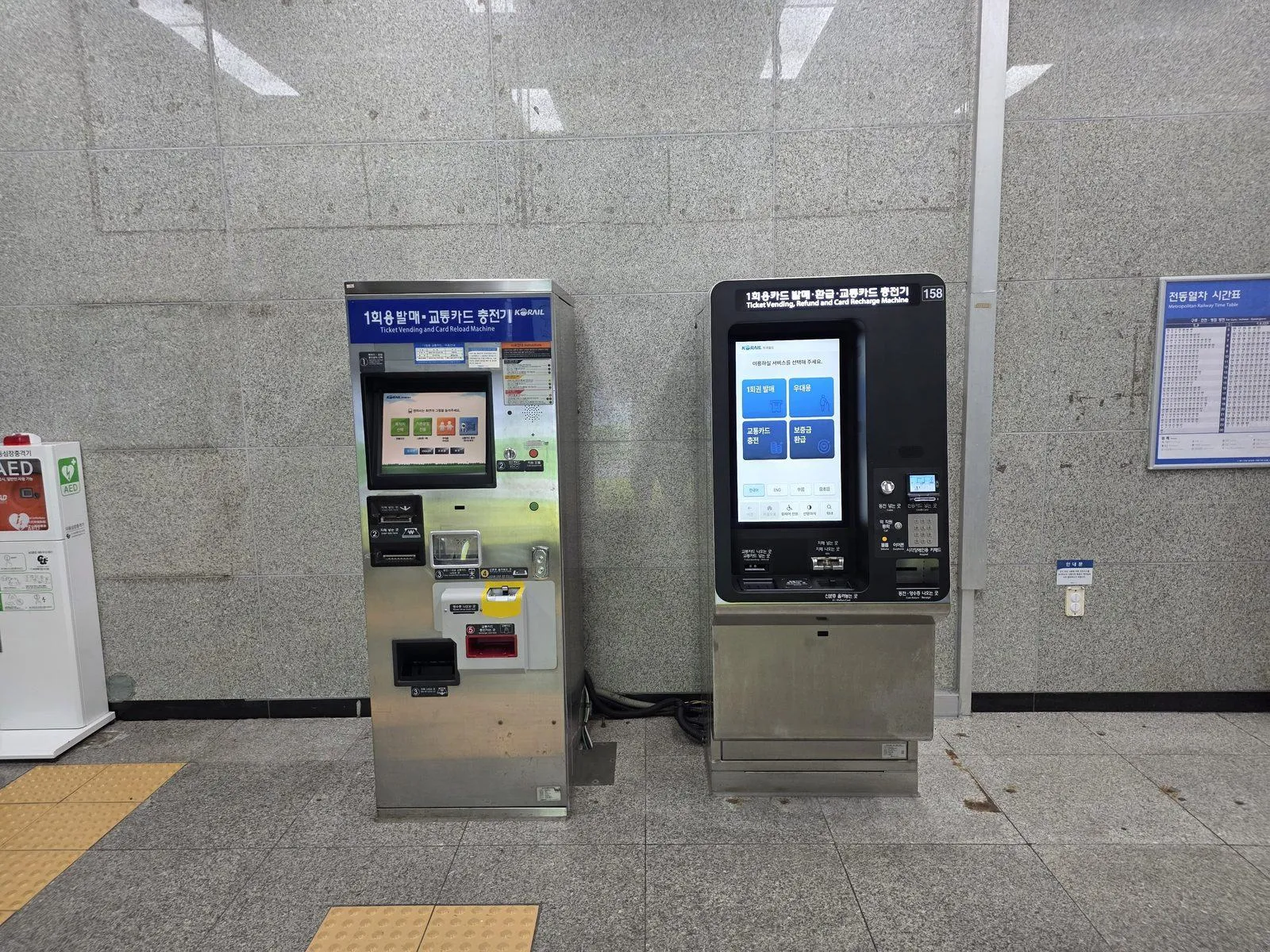
If you use an iPhone, read the mobile option below before buying a plastic card. There is a supported way to load a mobile transport balance with an overseas Mastercard.
Buying a physical card
Ask for a T-money card at a convenience store such as CU, GS25 or 7-Eleven. The Korea Tourism Organization’s transport card guide lists convenience stores as purchase and reload locations.
Buy a card for each person who will use the subway. If you are travelling with children, ask about registering their date of birth for the appropriate fare before loading the cards.
You can also order a card for airport collection. Compare the collection terminal and hours with your arrival, and read whether the selected offer includes any travel credit. It is an alternative to finding a shop on arrival, not a promise of a lower price.
Loading it at a counter or machine
At a convenience store, hand over the card and the Korean cash you want to add. At a station machine, select the language and card recharge option, then follow the screen’s instructions for placing the card and inserting money.
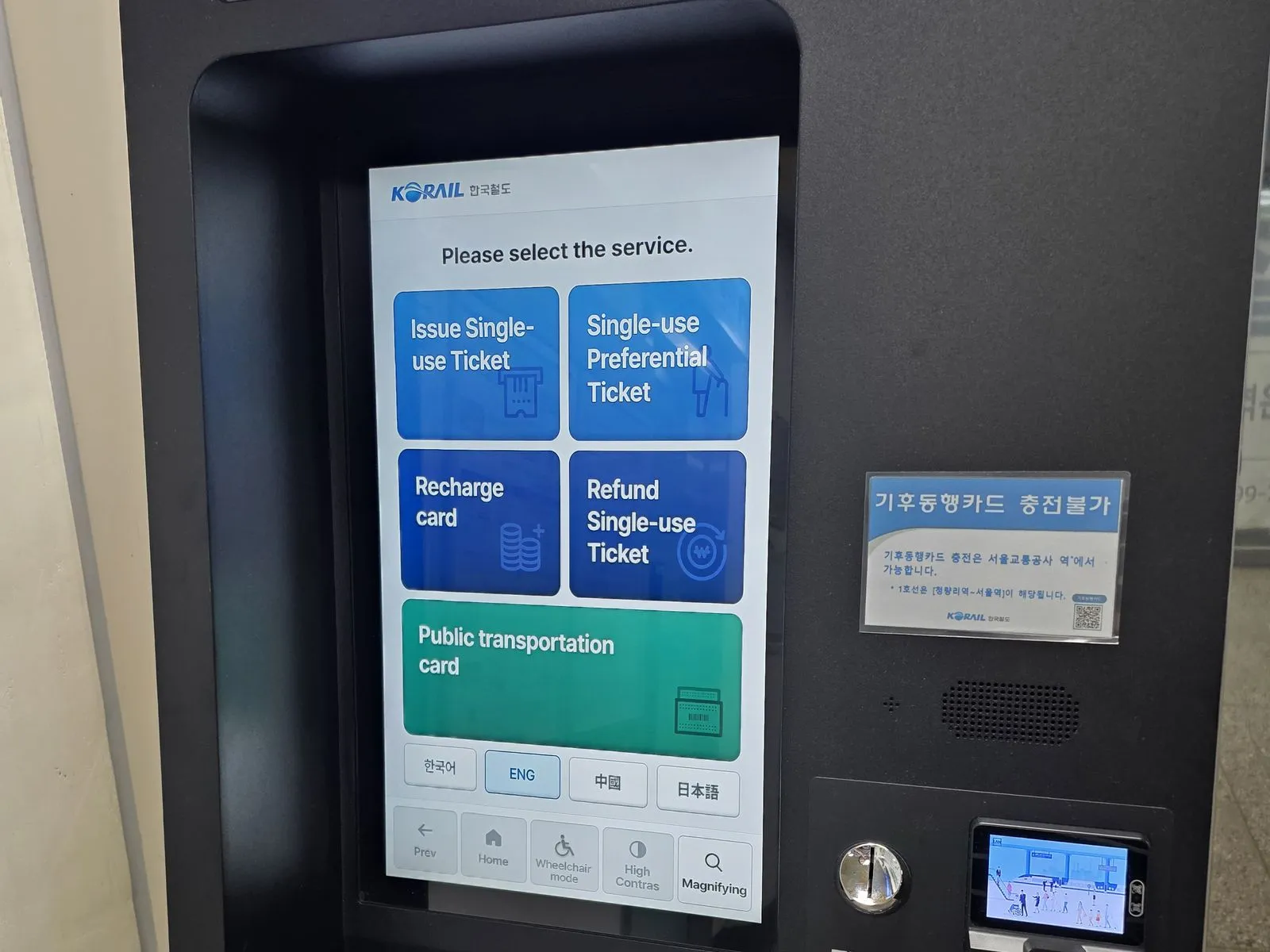
On the machine pictured here, ENG is the second language button and Recharge card is the top-up option. Keep the card on the reader until the transaction finishes, and confirm the new balance before leaving.
Bring cash for this top-up. Seoul’s March 2026 ticket machine announcement covers foreign card payments for single journey tickets and short Climate Card passes. It does not announce foreign card top-ups for ordinary T-money cards.
Using MobileTmoney on an iPhone
Mastercard’s official announcement confirms that international visitors can use Mastercard debit or credit cards with MobileTmoney and travel using an iPhone or Apple Watch.
Follow the app’s setup and funding instructions for your device. This creates a mobile transport balance. It does not mean you can tap an ordinary Mastercard directly at a subway gate, or that a plastic T-money card has been topped up.
If you use another card brand or device, read the current app requirements before relying on it for your first journey. Keep the physical card option available if you cannot complete setup.
Paying fares and making transfers
On the subway, tap at the entry gate and again at the exit. On a bus, tap when boarding and when getting off. Use the same transport card throughout the journey.
For transfers in the Seoul metropolitan area, the city’s rules allow a transfer within 30 minutes, extended to 60 minutes when the next boarding is between 9pm and 7am. The limit is four transfers, and the same route or vehicle does not qualify for another transfer discount.
Distance and service fares can still add to the total. The subway guide explains what a transfer discount covers. If a gate will not open, read the message and ask station staff for help rather than following another passenger through.
Using the card beyond the subway
Look for the T-money logo on participating transport services and shops. For airport buses, check the payment rules of the particular route. A KTX journey needs its own ticket, and the AREX express uses a separate reserved ticket.
A shop that accepts T-money can be useful for spending a small remaining balance on something you were going to buy anyway. Ask before paying rather than assuming every shop accepts the card.
Keep the balance manageable
Load enough for the journeys you have planned over the next few days, then add more as needed. Near the end of the trip, a smaller balance is easier to use up.
Refund locations and conditions depend on the amount and card. Use Tmoney’s current refund guidance, linked through the tourism organisation’s card guide, if you intend to reclaim a balance. The refund for a single journey ticket’s deposit is a different transaction from a T-money balance refund.
Comparing a pass with a stored balance
T-money charges for the journeys you take. If your plans involve frequent travel within Seoul, compare that with the Climate Card’s current coverage and validity. Map your actual routes first. A pass only helps if it covers those routes for the days you need.
Collect a card at the airport
Read the pickup instructions and included balance for the offer you select. Allow for a top-up before travelling if no credit is included.